Friday, June 16, 2023

Carol Higgins Clark: R.I.P.

Such sad news. So young. 
She wrote more than a dozen novels and also collaborated with her mother, Mary Higgins Clark died of appendix cancer on Monday in Los Angeles at the age of 66.
Credit...

From the NYT:

Carol Higgins Clark, who as a young woman retyped manuscripts by her mother, the famed mystery writer Mary Higgins Clark, before going on to become a best-selling suspense novelist herself, 
Ms. Higgins Clark wrote more than a dozen novels on her own, beginning with Decked in 1992, and several others with Christmas themes in collaboration with her mother, who died in 2020. She started out aspiring to be an actress, and she eventually accumulated a handful of credits in movies, several of them based on her mother’s books. But in 1975, while she was home for the summer from Mount Holyoke College in Massachusetts, another career possibility began to take shape when she bailed her mother, who was just beginning her suspense-writing career, out of a jam.

“She had her first suspense novel coming out, and had to get her second one in to her agent,” Carol Higgins Clark told NPR in 2008. “It was before computers, and she didn’t know how she was going to get it retyped in time, so I did it. And that’s really what got me into it, because I had talked to her about the characters and the plot. And I did that for a number of her books, which was great for me to learn about how to write.”

As her mother’s books caught on, Ms. Higgins Clark continued to act as an informal sounding board — doing research, helping her make dialogue for younger characters more authentic and more. In 1986, when her mother’s first suspense novel, “Where Are the Children?,” was made into a film, Carol Higgins Clark had a small role as a television reporter. Over the next 28 years she continued to appear in movies, many of them made for TV, based on her mother’s books, including “A Cry in the Night” (1992), in which she played a leading role.

That same year marked her own debut as a novelist. “Decked” introduced Regan Reilly, a private investigator who would anchor almost all of Carol Higgins Clark’s books.

In a nod to her mother, she made Reilly the daughter of a mystery writer. In that first book, set on an ocean liner, Reilly is haunted by the murder of her roommate 10 years earlier.


2023 Mcilvanney Prize Longlist & Bloody Scotland Debut Prize Shortlist

Bloody Scotland announced:

The McIlvanney Prize Longlist (Shortlist will be announced in August)

D V Bishop – Ritual of Fire (Macmillan)
Heather Darwent – The Things We Do To Our Friends  (Penguin)
Kate Foster – The Maiden (Mantle)
Mark Leggatt – Penitent (Fledgling Press)
S G Maclean – The Bookseller of Inverness (Quercus)
Callum McSorley – Squeaky Clean  (Pushkin)
Val McDermid – 1989 (Little,Brown)
Denise Mina – The Second Murderer (Vintage)
Robbie Morrison – Cast A Cold Eye (Macmillan)
Ian Rankin – A Heart Full of Headstones (Orion)
Craig Russell – The Devil’s Playground (Little,Brown)
Douglas Skelton – An Honourable Thief (Canelo)

The Bloody Scotland Debut Prize Shortlist

Heather Critchlow with Unsolved (Canelo) – a cold case mystery about two women who disappeared 35 years ago which was inspired by a true crime podcast. Heather Critchlow grew up in rural Aberdeenshire. She lives in St Albans.

Heather Darwent with The Things We Do To Our Friends (Penguin) - a suspense debut about a toxic friendship in 1st year at Edinburgh University. Originally fromYorkshire, Heather Darwent, now lives outside Edinburgh.

Kate Foster with The Maiden (Mantle) – set in the 17th Century is a reimagining of true historical events in which Lady Christian Nimmo is charged with the murder of her lover James Forrester. Kate Foster won Pitch Perfect at Bloody Scotland in 2020 with her outline for the book. She lives in Edinburgh.

Callum McSorley with Squeaky Clean (Pushkin) featuring DI Ally McCoist the least popular detective in the Glasgow police. A thriller filled with pitch-black humour. Callum McSorley graduated from the University of Strathclyde in 2013 and since then his stories have appeared in Gutter magazine and New Writing Scotland.
 

Fulton Ross with The Unforgiven Dead (Inkshares) about a Highland Constable who is reluctant to embrace his gift of second sight. Inspired by Gaelic folk tales it is a fresh take on gothic crime noir. Fulton Ross is from the Highlands, went to Glasgow University and now lives in Northern Ireland.


Thursday, June 15, 2023

FATHER'S DAY MYSTERIES // FATHER'S DAY CRIME FICTION

Father's Day: A day to celebrate Dad. 
My father was the ultimate reader. His idea of a great vacation was sitting in a chair reading a good mystery. It didn't mattered where he was, the book took him miles away --and he was comfortable!

Even now after he's been gone for many years, I find myself finishing a book and saying to myself, "I have to send this to Dad. He'll love it." It always makes me sad to remember I can't. My father engendered my love of mysteries through his collection of mystery novels and Ellery Queen Mystery Magazines. I like to think he's up there somewhere in a chair surrounded by books, reading a good mystery.

This year I've included True Crime, as well as fiction, on my Father's Day list. I've also included more Short Stories and a Graphic Novel. And, of course, I've updated the fiction list. Let me know any titles that you think should be included.

FATHER'S DAY MYSTERIES

Father’s Day by John Calvin Batchelor
Father’s Day by Rudolph Engelman
Father's Day: A Detective Joe Guerry Story by Tippie Rosemarie Fulton
Father’s Day Keith Gilman 
Dear Old Dead by Jane Haddam
The Father’s Day Murder by Lee Harris
Day of Reckoning by Kathy Herman
Dead Water by Victoria Houston
Father’s Day Murder by Leslie Meier
On Father's Day by Megan Norris
Father’s Day by Alan Trustman

Murder for Father, edited by Martin Greenberg (short stories)
"Father's Day" by Patti Abbott --short story at Spinetingler
Collateral Damage: A Do Some Damage Collection  e-book of Father's Day themed short stories.
"Where's Your Daddy?" by Sue Ann Jaffarian

Let me know if I missed any titles.

**
And a list of Crime Fiction that focuses on Fathers and Sons and Fathers and Daughters. Have a favorite Father / Son Father/Daughter Mystery? Post below in comments or send me a note.


FATHERS AND SONS and FATHERS AND DAUGHTERS in CRIME FICTION

Carriage Trade by Stephen Birmingham
His Father's Son by Tony Black
Her Father's Secret by Sara Blaedel
The Guest Room by Chris Bohjalian
The Lonely Witness by William Boyle
The Controller by Matt Brolly
All Things Cease to Appear by Elizabeth Brundage
Secret Father by James Carroll
The Emperor of Ocean Park by Stephen L. Carter
The President's Daughter by Bill Clinton & James Patterson
The Hasidic Rebbe's Son by Joan Lipinsky Cochran
Hot Plastic by Peter Craig
The Marsh King's Daughter by Karen Dionne 
The Poacher's Son by Paul Doiron
Killings by Andre Dubus
The Perfect Father by Charlotte Duckworth
Lars and Little Olduvai by Keith Spencer Felton
The Dead Daughter by Thomas Fincham
Unsub by Meg Gardner   
The Curious Incident of the Dog in the Night-Time by Mark Haddon
The Dead Fathers Club by Matt Haig
Gnosis by Rick Hall
Atticus by Ron Hansen
King of Lies by John Hart
Damage by Josephine Hart
The Good Father by Noah Hawley
1922; The Shining by Stephen King
Revival Season by Bharti Kirchner    
Cold in July by Joe R. Lansdale
A Perfect Spy by John LeCarre 
To Kill a Mockingbird by Harper Lee
I Let You Go by Clare Mackintosh
Darksight by D.C. Mallery
Eileen by Ottessa Moshfegh
Blood Grove by Walter Mosley 
The Son by Jo Nesbo
Beijing Payback by Daniel Nieh
Ali Cross: Like Father, Like Son by James Patterson
The President's Daughter by James Patterson & Bill Clinton
Sherlock Holmes Dark Son, Dark Father by John Pirillo
The Godfather by Mario Puzo
The Roman Hat Mystery; other novels by Ellery Queen (Manfred B. Lee and Frederic Dannay)
My Son, the Murderer by Patrick Quentin
Paperback Original by Will Rhode
The Senior Sleuths: Dead in Bed by Marcia Rosen
Baby's First Felony by John Straley
The Father by Anton Swenson
City on the Edge by David Swinson
To Die in California by Newton Thornburg
The Twelve Lives of Samuel Hawley by Hannah Tinti
Father's Day by Simon Van Booy
The Second Son by Jordan Wells
The Ones Who Do by Daniel Woodrell 

True Crime: So very, very dark! Disturbing...but a new category on the list!

Incident at Big Sky by Johnny France and Malcolm Mcconnell
Fatal Vision by Joe McGinniss
Murder in Little Egypt by Darcy O'Brien
If I Can't Have Them by Gregg Olsen
The Poison Tree by Alan Prendergast
Above Suspicion; Death Sentence by Joe Sharkey
Fred & Rose by Howard Sounes

Short Stories: 

"Father's Day" by Michael Connelly in Blue Murder
A Holiday Sampler by Christine Collier
Where's Your Daddy? (Holidays from Hell Short Story Series) by Sue Ann Jaffarian
Murder for Father, Edited by Martin Greenberg, stories by Ruth Rendell, Ed Gorman, Max Allan Collins, Bill Crider and more

Graphic Novels:

Father's Day by Mike Richardson, Illustrated by Gabriel Guzman


Cartoon of the Day: Dogs


Wednesday, June 14, 2023

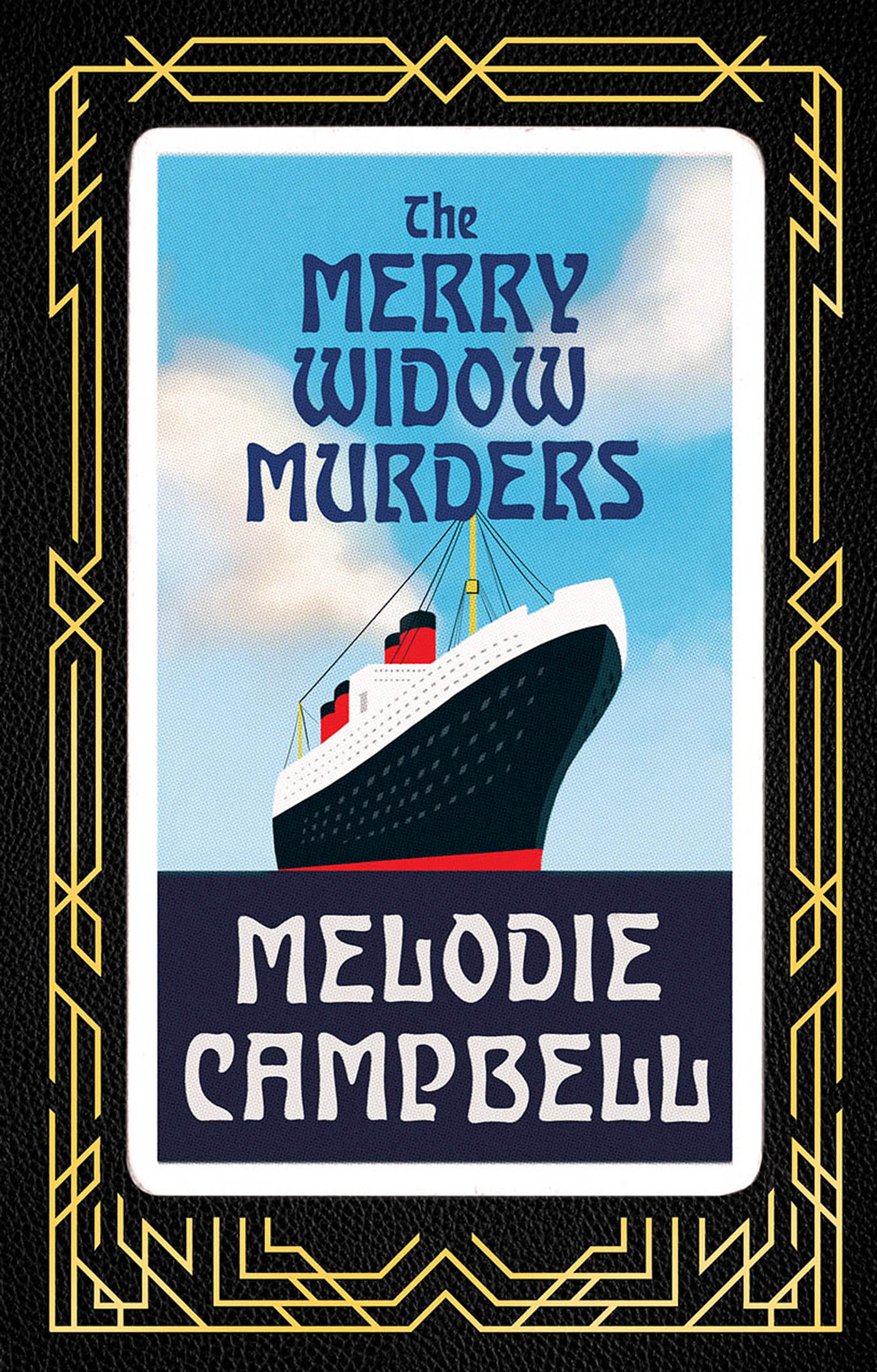
What do Prohibition, the Magna Carta, and ‘Rollicking’ Comedy Have in Common? Guest Post by Melodie Campbell

Ah, the timeless question. Where do you get your ideas?

I think it was Stephen King who talked about a little mail-order store in small town America...I've never been able to find that store myself. Stephen keeps it a close secret (I hope you're smiling.)

But I had reason to experience that dilemma about two years ago, a year into the pandemic, and two years after my beloved husband David died. 

Damn that covid, and what it's done to publishing.  

When Orca Books told me they were capping the line that carried my Goddaughter series (translation: still selling the books in the line, but closing it to future books, at least for now)  I was in a tight spot.
I'd had 10 contracts in a row from Orca!  That series garnered three major awards!  How could I leave it behind?

Put another way: what the poop was I going to write next?

The Goddaughter series featured a present-day mob goddaughter who didn't want to be one. Gina Gallo had a fiance who thought she had gone straight. But of course, in each book she would get blackmailed into helping the family pull off heists or capers that would inevitably go wrong.  It allowed for a lot of madcap comedy.

Some would say I was a natural to write a series about a mob goddaughter (we'll just leave it at that.)  And I liked the serious theme behind the comedy: You're supposed to love and support your family. But what if your family is this one? 

Issues of grey have always interested me. We want things to be black and white in life, but quite often, they are more complex than that. I like exploring justice outside the law in my novels. But I digress...
The Goddaughter books brought me to the attention of Don Graves, a well-known newspaper book reviewer up here. He commiserated with the end of the Goddaughter series, and immediately suggested the following:

"Why don't you write about her grandmother? Prohibition days, when the mob was becoming big in Hamilton."

The idea burned in me. Except it wouldn't be her grandmother. (Don is older than me.) It would be her great-grandmother! Coming of age in the time of Rocco Perri and Bessie Starkman, the queen of mob women…

I settled on 1928, because that was the year women finally got the vote in England. The status of women features very much in this novel. Why? I was widowed too young. I could relate to my protagonist.      That got me interested in how widows fared in ages past.  
 
Did you know that the Magna Carta – which addressed the early laws of England established after the Norman invasion – was a turning point for women? In it, they decreed that a widow could not be forced to remarry. That meant a woman could hold the property of her late husband. Now, the fellows who came up with this law weren’t necessarily doing it for the benefit of women. Most experts agree that they were most likely keen on ensuring the late hubby’s property stayed in the family. But it had the effect of giving widows agency. Lucy, my protagonist, has money of her own, and that means freedom.

The time frame also allowed me to use the aftermath of WW1, including men like my own grandfather, wounded by gas, and shell-shocked. I would make the protagonist a young widow, because I knew grief - oh man, did I know grief. I could write convincingly about that.

But I would also use bathos to lighten the tale. (I seem incapable of writing anything straight.) The humour of the Goddaughter books finds its way into The Merry Widow Murders, and so far, has generated smiles for reviewers.

The book took me over a year to write, working full time on it. It helped me to channel my grief.  It forced me to step out of my comfort zone and write something with considerable depth. I had to learn how to combine comedy and deep emotion, to the betterment of both.

And it taught me that - even widowed - I wasn't entirely alone. That ideas are beautiful things that can come from friendship, and the good hearts of readers and reviewers you are fortunate to meet along your publishing journey.

***
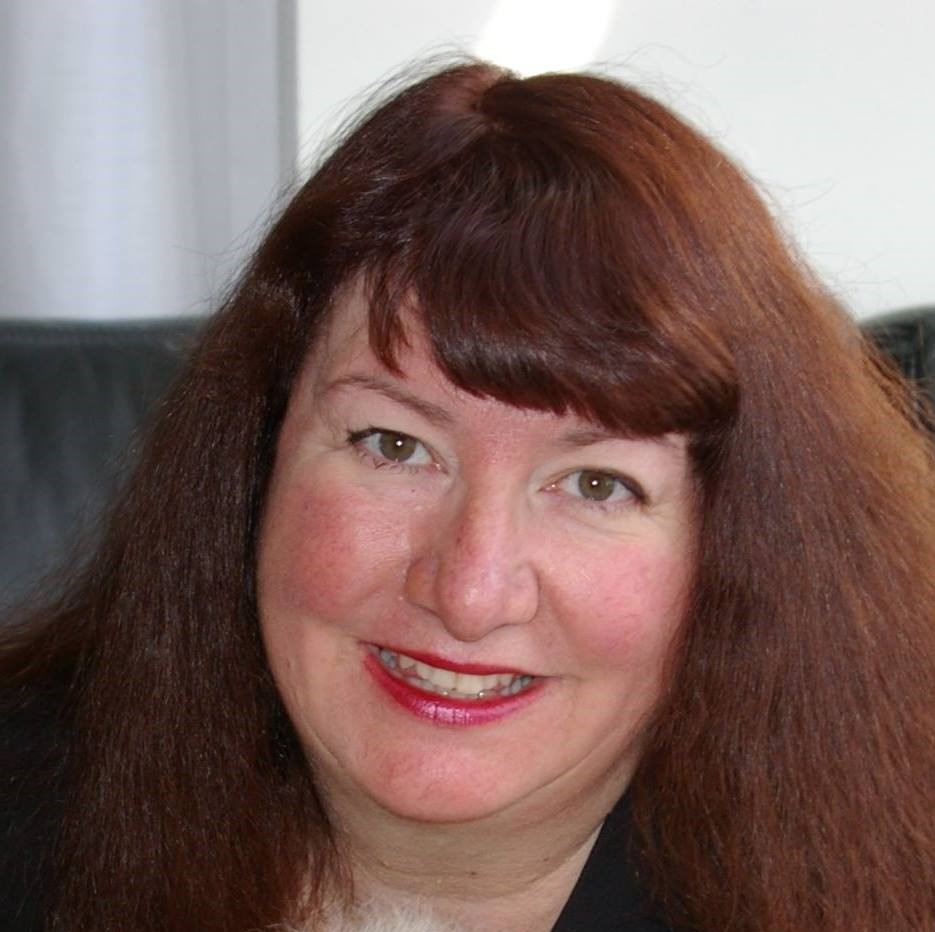
Called the "Queen of Comedy" by the Toronto Sun, and compared to Janet Evanovich by Library Journal, Melodie Campbell writes capers, heists and golden age mysteries. Winner of ten awards for crime fiction, Melodie has 17 books and over 60 short stories, but she got her start writing stand-up. The Merry Widow Murders has just been released from Cormorant Books.

“The high society flair of Death on the Nile meets a 1920s ocean liner in this sensational mystery from Melodie Campbell.”  Open Book