

Since spring, I’ve been studying many books and magazines, including Ellery Queen’s Mystery Magazine. I’ve done this partly for future review projects, and partly out of my literary curiosity. Being visually impaired, this reading experience has only been made possible by the mystery magazine’s inclusion in the National Library Service for the Blind and Print Disabled, and their distribution through the Perkins Library here in Massachusetts; I thank both institutions firstly for empowering my research.
While I’ve encountered many intriguing mystery stories in this way, I discovered a special connection with one in particular: Jeff Soloway’s “The Theft of Las Meninas” (EQMM November/December 2024). A past winner of the MWA’s Robert L. Fish Memorial award, Jeff Soloway also published (under Penguin’s Alibi imprint) the Travel Writer mystery series. It was this common interest in applying facets of the travel-writing experience (something I discussed in terms of the wider mystery genre, in my May blog post for Mystery Fanfare) that attracted my interest.
I listened to the story several times, each time more intrigued; its combination of travel and the philosophical, its smooth pacing, wry humor and well-plotted structure, all made “The Theft of Las Meninas” stand out compared with many genre stories. In short, it told a story, but its larger themes—of value, negotiation, friendship, honor and adventure—were all carefully expressed in a manner that did not overburden the reader. Soloway’s writing was deceptively light, but concealed larger themes that critics could interpret at length, a dimension not always found in commercial genre fiction.
This general observation—and another, very specific one—led me to delve into the story. The following three sections—which include quotes from the story, and comments kindly provided by the author himself—I will present what I got right, what I got wrong, and why it matters. (And of course, there will be no spoilers).
What I Got Right
“The Theft of Las Meninas” is an art-heist caper about the theft of a famous painting, one that has never actually been stolen. Housed in Madrid’s Museo Nacional del Prado, ‘Las Meninas’ (‘The Ladies-in-Waiting,’ 1656) by Diego Velázquez depicts not only the Spanish royal family and its attendants, but also the painter himself, gazing outward at the observer (us) from behind his canvas. This ironic self-inclusion (which writers, of course, have been known to do) added paradox and self-awareness to a complex piece of multiple perspectives, making the baroque work appeal to writers like Borges, according to Robert M. Philmus in DePauw University’s 1974 Science Fiction Studies. (That article discusses the influence of art on H.G. Wells and Borges).
Soloway’s tale is narrated by an art professor who moonlights as a sleuth/art appraiser for UNESCO and other international bodies, using his personal capacities and friendship with a certain art thief named Max. My ears pricked up, upon hearing the following description of Max; it seemed that Soloway was basing his character on a real art thief—and one whose remarkable career I had come across, in the research of my own detective novel. Soloway’s narrator states:
“I booked a flight to Paris to visit my friend Max Wolverton, a protagonist and source of several chapters of my best-seller, Beauty among Thieves: Art Heists through the Ages, upon whom I had bestowed the ridiculous pseudonym, ‘The Red Death.’ Max loved it, being blond as a Swede. His customary technique was to visit sleepy, underfunded village museums on weekday mornings, slash canvases from their frames with a modified box cutter he’d dubbed ‘Taylor’ (a name he had to both spell and explain for me), and smuggle them out under his blazer.”
To me, this was uncannily familiar; it reminded me of the real-life French art thief, Stéphane Breitwieser, whose story I had encountered a year or more before in the varied course of my own detective-fiction research. While I never used any element of this legendary figure from European arts heists of the 1990s, I assumed he must be the person on whom the author had based his character. I wrote to inquire. Much to my delight, Jeff Soloway replied that indeed, Stéphane Breitwieser was the basis for Max in “The Theft of Las Meninas.”
While Max works alone in that story, his real-life model was aided by a girlfriend who kept lookout duty when they would visit small, provincial museums in Switzerland and France. Breitwieser was adept at quickly cutting out the paintings—including invaluable Dutch Old Masters—from their frames with his knife, rolling them up, and concealing them under his coat before making a leisurely getaway. They did this scores of times, accumulating a large collection of works which the thief (as at least with one of Max’s stolen works depicted in the story) would keep at home for his own personal enjoyment. When finally the police caught on, the thief and his parents destroyed the stolen works by fire and water—a colossal loss for the art-loving public.
In my June email, I asked the author whether Stéphane Breitwieser had been the inspiration for Max, and if so, how Soloway had come across his story. My hunch about the first was correct. Soloway added in his reply:
"I read a profile of him in the New Yorker magazine, probably related to a book someone was writing about him,” Soloway replied. “I found his story both fascinating and hilarious. I love the idea that all you really need to pull off a major art theft is common sense, boldness, and a pocket-knife."
What I Got Wrong
While I was happy to hear that my guess had been correct, there were other analytical guesses that I’d made that turned out to be wrong. And this, I would argue, is why it is so important for writers, researchers and the general literary public to interview authors while they are still alive. In my experience of writing about the works of deceased authors, it becomes exponentially more difficult to correctly assess authorial intention, preferences or influences precisely. We are left with so many tantalizing questions about great works of literature that can unfortunately never be answered.
There are two specific examples of what I got wrong in my reading of “The Theft of Las Meninas,” and in both cases the replies I received from the author definitively clarified the issues. As noted, I took a very close read to the story, and this included scrutiny of the all-important opening line. In this case, it is:
“You may remember when the finest painting in the world was stolen.”
Aside from its introduction of memory and distancing (the whole story does a marvelous job of making time not seem to pass, or be ponderous), the tone of this sentence struck me as something from the Golden Age of detective fiction. And sure enough, after a little searching, I found some similar examples in the works of Arthur Conan Doyle. For example, "The Musgrave Ritual" is a frame story narrated in parts by Watson and Holmes. The example is one self-referential statement directly linking a past experience and his vocation: “You may remember how the affair of the Gloria Scott, and my conversation with the unhappy man whose fate I told you of, first turned my attention in the direction of the profession which has become my life’s work.”
Although “The Theft of Las Meninas” is not structurally a frame story, I imagined that the author might possibly be giving a nod here to Holmes because of both the general theme of paintings and frames and vocations in the ‘Las Meninas’, and because of specific early sentences in that story, after the narrator has been called in to the Prado to inspect the scene of the crime, where the painting has been neatly cut from its frame. Soloway writes:
“After examining the frame, I too could identify the thief, but not thhe reason.”
This line (and the entire story) is narrated by the academic/detective, Professor Laurence Morrow. Laurence has code-named his underworld friend Max as ‘the Red Death,’ in both his own book and when discussing the thief with another character, Coronado Mengual of INTERPOL’s Cultural Defense Department. From this code-name, and a later description of a sojourn of Max and Laurence in La Paz, I detected direct and indirect nods to Edgar Allen Poe.
After investigating the opening line and concept of frame stories in a self-referential story about a self-referential painting, I really started kicking the tires on it for anything else. At last, I thought I had found something intriguing, as at a crucial point of the mystery’s resolution, the extraction of paint chips becomes important. Given the Poe reference, I imagined, could it be possible that Soloway had made a hidden allusion to a rare word from “The Murders in the Rue Morgue”?
The word ‘stereotomy’ derives originally from an Ancient Greek geometrical concept of three-dimensional objects. In Poe’s tale ‘stereotomy’ appears in a dialogic section between detective C. Auguste Dupin and his visiting narrator, as a detail in his explanation of his deductive method.
I was curious about whether any of these literary influences might have been considered by the author, as it would certainly impact future analysis of it. Soloway answered the mystery for me succinctly in a follow-up email:
“First, I confess that, though I love the Dupin stories, and of course I thought of them as I was considering setting a mystery in Paris, I had completely forgotten about the concept of stereotomy. Second, and similarly, I wasn't really thinking of any Sherlock Holmes story when I chose to begin with the phrase ‘You may remember.’ It just seemed to fit the intellectually presumptuous narrator.”
Why It Matters
First: I do not regret having guessed wrongly about a couple of literary points; I am just happy that in researching them, I was introduced to new stories, new concepts, and new ideas. Perhaps, someday, I will even find some of these details of use in my own writing. That has always been the way it seems to go.
Second: I believe that the short story, and especially short genre tales like the mystery story, remain less appreciated than novels and as such, are less often reviewed. Yet anyone who has ever taken the time and effort to craft such a story knows very well how difficult it is to express a compelling and engaging story (and, one that hasn’t already been written) not to mention, in a relatively few words. This is the first lesson I draw from my present experience in reviewing Jeff Soloway’s fine story—that is, that short-story reviews are eminently worthwhile, and researching them should be encouraged and practiced.
The second lesson, and one which is applicable to research on literary works of any length, is the great advantage the researcher gains in interviewing authors while they are still alive to answer for themselves about questions of intention and influence. If nothing else, today’s article has explained definitively with the author’s own input his decisions and influences (or not), and this might be of use to future generations of researchers. Simply put, there is so much common benefit to the literary community, to fellow writers, readers and researchers, in contributing to a more comprehensive record of the literature being created in our time, its influences, innovations and expectations.
Author Bio
Christopher Deliso is an American author, former long-term contributor to The Economist Intelligence Unit, IHS Jane’s, and co-author of over twenty Lonely Planet travel guides for five Southeast European countries. He has been widely published in major global media, and his first Detective Grigoris story, "The Mystery of the Scavenging Crabs," was published in January 2025 in the Crimeucopia anthology, Hey! Don’t Read That, Read This! (Murderous Ink Press, UK). His intelligence-noir story, “The Mexico Job,” was published by King’s River Life in May 2025.
Subscribe to Christopher Deliso’s Substack for occasional articles on literature, history, travel and reviews.
While I’ve encountered many intriguing mystery stories in this way, I discovered a special connection with one in particular: Jeff Soloway’s “The Theft of Las Meninas” (EQMM November/December 2024). A past winner of the MWA’s Robert L. Fish Memorial award, Jeff Soloway also published (under Penguin’s Alibi imprint) the Travel Writer mystery series. It was this common interest in applying facets of the travel-writing experience (something I discussed in terms of the wider mystery genre, in my May blog post for Mystery Fanfare) that attracted my interest.
I listened to the story several times, each time more intrigued; its combination of travel and the philosophical, its smooth pacing, wry humor and well-plotted structure, all made “The Theft of Las Meninas” stand out compared with many genre stories. In short, it told a story, but its larger themes—of value, negotiation, friendship, honor and adventure—were all carefully expressed in a manner that did not overburden the reader. Soloway’s writing was deceptively light, but concealed larger themes that critics could interpret at length, a dimension not always found in commercial genre fiction.
This general observation—and another, very specific one—led me to delve into the story. The following three sections—which include quotes from the story, and comments kindly provided by the author himself—I will present what I got right, what I got wrong, and why it matters. (And of course, there will be no spoilers).
What I Got Right
“The Theft of Las Meninas” is an art-heist caper about the theft of a famous painting, one that has never actually been stolen. Housed in Madrid’s Museo Nacional del Prado, ‘Las Meninas’ (‘The Ladies-in-Waiting,’ 1656) by Diego Velázquez depicts not only the Spanish royal family and its attendants, but also the painter himself, gazing outward at the observer (us) from behind his canvas. This ironic self-inclusion (which writers, of course, have been known to do) added paradox and self-awareness to a complex piece of multiple perspectives, making the baroque work appeal to writers like Borges, according to Robert M. Philmus in DePauw University’s 1974 Science Fiction Studies. (That article discusses the influence of art on H.G. Wells and Borges).
Soloway’s tale is narrated by an art professor who moonlights as a sleuth/art appraiser for UNESCO and other international bodies, using his personal capacities and friendship with a certain art thief named Max. My ears pricked up, upon hearing the following description of Max; it seemed that Soloway was basing his character on a real art thief—and one whose remarkable career I had come across, in the research of my own detective novel. Soloway’s narrator states:
“I booked a flight to Paris to visit my friend Max Wolverton, a protagonist and source of several chapters of my best-seller, Beauty among Thieves: Art Heists through the Ages, upon whom I had bestowed the ridiculous pseudonym, ‘The Red Death.’ Max loved it, being blond as a Swede. His customary technique was to visit sleepy, underfunded village museums on weekday mornings, slash canvases from their frames with a modified box cutter he’d dubbed ‘Taylor’ (a name he had to both spell and explain for me), and smuggle them out under his blazer.”
To me, this was uncannily familiar; it reminded me of the real-life French art thief, Stéphane Breitwieser, whose story I had encountered a year or more before in the varied course of my own detective-fiction research. While I never used any element of this legendary figure from European arts heists of the 1990s, I assumed he must be the person on whom the author had based his character. I wrote to inquire. Much to my delight, Jeff Soloway replied that indeed, Stéphane Breitwieser was the basis for Max in “The Theft of Las Meninas.”
While Max works alone in that story, his real-life model was aided by a girlfriend who kept lookout duty when they would visit small, provincial museums in Switzerland and France. Breitwieser was adept at quickly cutting out the paintings—including invaluable Dutch Old Masters—from their frames with his knife, rolling them up, and concealing them under his coat before making a leisurely getaway. They did this scores of times, accumulating a large collection of works which the thief (as at least with one of Max’s stolen works depicted in the story) would keep at home for his own personal enjoyment. When finally the police caught on, the thief and his parents destroyed the stolen works by fire and water—a colossal loss for the art-loving public.
In my June email, I asked the author whether Stéphane Breitwieser had been the inspiration for Max, and if so, how Soloway had come across his story. My hunch about the first was correct. Soloway added in his reply:
"I read a profile of him in the New Yorker magazine, probably related to a book someone was writing about him,” Soloway replied. “I found his story both fascinating and hilarious. I love the idea that all you really need to pull off a major art theft is common sense, boldness, and a pocket-knife."
What I Got Wrong
While I was happy to hear that my guess had been correct, there were other analytical guesses that I’d made that turned out to be wrong. And this, I would argue, is why it is so important for writers, researchers and the general literary public to interview authors while they are still alive. In my experience of writing about the works of deceased authors, it becomes exponentially more difficult to correctly assess authorial intention, preferences or influences precisely. We are left with so many tantalizing questions about great works of literature that can unfortunately never be answered.
There are two specific examples of what I got wrong in my reading of “The Theft of Las Meninas,” and in both cases the replies I received from the author definitively clarified the issues. As noted, I took a very close read to the story, and this included scrutiny of the all-important opening line. In this case, it is:
“You may remember when the finest painting in the world was stolen.”
Aside from its introduction of memory and distancing (the whole story does a marvelous job of making time not seem to pass, or be ponderous), the tone of this sentence struck me as something from the Golden Age of detective fiction. And sure enough, after a little searching, I found some similar examples in the works of Arthur Conan Doyle. For example, "The Musgrave Ritual" is a frame story narrated in parts by Watson and Holmes. The example is one self-referential statement directly linking a past experience and his vocation: “You may remember how the affair of the Gloria Scott, and my conversation with the unhappy man whose fate I told you of, first turned my attention in the direction of the profession which has become my life’s work.”
Although “The Theft of Las Meninas” is not structurally a frame story, I imagined that the author might possibly be giving a nod here to Holmes because of both the general theme of paintings and frames and vocations in the ‘Las Meninas’, and because of specific early sentences in that story, after the narrator has been called in to the Prado to inspect the scene of the crime, where the painting has been neatly cut from its frame. Soloway writes:
“After examining the frame, I too could identify the thief, but not thhe reason.”
This line (and the entire story) is narrated by the academic/detective, Professor Laurence Morrow. Laurence has code-named his underworld friend Max as ‘the Red Death,’ in both his own book and when discussing the thief with another character, Coronado Mengual of INTERPOL’s Cultural Defense Department. From this code-name, and a later description of a sojourn of Max and Laurence in La Paz, I detected direct and indirect nods to Edgar Allen Poe.
After investigating the opening line and concept of frame stories in a self-referential story about a self-referential painting, I really started kicking the tires on it for anything else. At last, I thought I had found something intriguing, as at a crucial point of the mystery’s resolution, the extraction of paint chips becomes important. Given the Poe reference, I imagined, could it be possible that Soloway had made a hidden allusion to a rare word from “The Murders in the Rue Morgue”?
The word ‘stereotomy’ derives originally from an Ancient Greek geometrical concept of three-dimensional objects. In Poe’s tale ‘stereotomy’ appears in a dialogic section between detective C. Auguste Dupin and his visiting narrator, as a detail in his explanation of his deductive method.
I was curious about whether any of these literary influences might have been considered by the author, as it would certainly impact future analysis of it. Soloway answered the mystery for me succinctly in a follow-up email:
“First, I confess that, though I love the Dupin stories, and of course I thought of them as I was considering setting a mystery in Paris, I had completely forgotten about the concept of stereotomy. Second, and similarly, I wasn't really thinking of any Sherlock Holmes story when I chose to begin with the phrase ‘You may remember.’ It just seemed to fit the intellectually presumptuous narrator.”
Why It Matters
First: I do not regret having guessed wrongly about a couple of literary points; I am just happy that in researching them, I was introduced to new stories, new concepts, and new ideas. Perhaps, someday, I will even find some of these details of use in my own writing. That has always been the way it seems to go.
Second: I believe that the short story, and especially short genre tales like the mystery story, remain less appreciated than novels and as such, are less often reviewed. Yet anyone who has ever taken the time and effort to craft such a story knows very well how difficult it is to express a compelling and engaging story (and, one that hasn’t already been written) not to mention, in a relatively few words. This is the first lesson I draw from my present experience in reviewing Jeff Soloway’s fine story—that is, that short-story reviews are eminently worthwhile, and researching them should be encouraged and practiced.
The second lesson, and one which is applicable to research on literary works of any length, is the great advantage the researcher gains in interviewing authors while they are still alive to answer for themselves about questions of intention and influence. If nothing else, today’s article has explained definitively with the author’s own input his decisions and influences (or not), and this might be of use to future generations of researchers. Simply put, there is so much common benefit to the literary community, to fellow writers, readers and researchers, in contributing to a more comprehensive record of the literature being created in our time, its influences, innovations and expectations.
Author Bio
Christopher Deliso is an American author, former long-term contributor to The Economist Intelligence Unit, IHS Jane’s, and co-author of over twenty Lonely Planet travel guides for five Southeast European countries. He has been widely published in major global media, and his first Detective Grigoris story, "The Mystery of the Scavenging Crabs," was published in January 2025 in the Crimeucopia anthology, Hey! Don’t Read That, Read This! (Murderous Ink Press, UK). His intelligence-noir story, “The Mexico Job,” was published by King’s River Life in May 2025.
Subscribe to Christopher Deliso’s Substack for occasional articles on literature, history, travel and reviews.


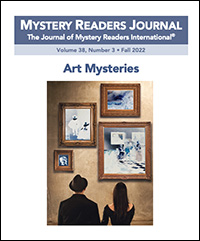 If you're a PDF subscriber, you should have received download
instructions (let me know if you didn't). Hard copy subscription copies should arrive by early next week. International subscribers will receive their issues within two weeks. PDF Contributor copies will go out this weekend. Thanks to everyone who contributed to this amazing issue.
If you're a PDF subscriber, you should have received download
instructions (let me know if you didn't). Hard copy subscription copies should arrive by early next week. International subscribers will receive their issues within two weeks. PDF Contributor copies will go out this weekend. Thanks to everyone who contributed to this amazing issue.


