Showing posts with label Randal S. Brandt. Show all posts

Thursday, April 23, 2015

Nancy Barr Mavity: Guest post by Randal S. Brandt

Today I welcome guest blogger Randal S. Brandt. Randal is a librarian at The Bancroft Library, University of California, Berkeley. The idea for this article came out of research he did in preparation for a panel on "Female Authors of the Past" at Left Coast Crime 2015 in Portland, in which he looked at several women who came to prominence during the 1930s and 40s in the thriving mystery scene of the San Francisco Bay Area.

Randal S. Brandt:
Nancy Barr Mavity 

Fifty-six years ago today, on April 23, 1959, Nancy Barr Mavity died unexpectedly of a heart attack at her home in Piedmont, California at the age of 68. She had been at her desk at the Oakland Tribune the day before— the same as every day of the previous 34 years. A feminist ahead of her time, Mavity refused to be confined to a single role. Instead, she—to borrow a phrase popular in today’s parlance—“leaned in” and led three distinctive lives as a wife and mother, a successful crime and mystery novelist, and a well-respected newspaper journalist, so well respected that the Tribune carried the story of her death on Page One on the very day she died.

But who was Nancy Barr Mavity?

Biographical details of her life paint a compelling portrait of a remarkable woman with an independent spirit. Nann Clark Barr was born in Illinois on October 22, 1890 to Dr. Granville Walter Barr and his wife Annabelle Applegate Barr. While she was still a young girl, the family moved to Keokuk, Iowa where her father, who had traded a career in medicine for journalism, became City Editor of the local newspaper, The Gate City. She earned an A.B. degree from Western College in Oxford, Ohio, attended graduate school at Wellesley College and earned both a Master’s degree and a Ph.D. in Philosophy from Cornell University, where she was awarded one of the prestigious Susan Linn Sage Graduate Scholarships in Philosophy. After leaving Cornell, she taught philosophy at Connecticut College for Women before moving to New York City to join a publishing firm. On Christmas Day 1917 Nancy married Arthur Benton Mavity, who also worked in publishing, and in March 1919, shortly after she gave birth to their first child, they moved to California. The move, which was precipitated when Arthur’s firm re-assigned him to the San Francisco office, was not a welcome one as Nancy also had a promising career in progress in New York.

They settled in Oakland and in 1920 Nancy went to work for the San Francisco Chronicle writing book reviews and literary essays. In the early 1920s, Sunset Magazine published a number of articles that she had written while traveling for six months on her own in Japan, China, Indonesia, Australia, and New Zealand. This was a truly remarkable undertaking, as her husband and two young children remained at home. Remarkable for the time, yes, but simply a matter of course in the Mavity family. In 1926, Nancy wrote a highly personal article on “The Wife, the Home, and the Job” for Harper’s Magazine in which she extolled the virtues of the working wife and mother and fiercely advocated for a woman’s right to choose her work and share parenting and housekeeping responsibilities with her husband, citing her trip as an example. (She revisited this theme in a 1951 issue of Harper’s with a follow-up article, “The Two-Income Family,” reflecting on her quarter-century of working outside the home.)

In the meantime, she began writing books—all types of books. Nancy’s initial effort, Responsible Citizenship, a textbook on American politics co-written with her husband, was published in 1923. This was followed shortly by a volume of poetry dedicated to her daughter called A Dinner of Herbs (she had been publishing her poems in various magazines since childhood), and her first novel, Hazard, which was largely autobiographical. She also wrote a history of newspaper journalism, The Modern Newspaper, in 1930 and an even-handed biography of Aimee Semple MacPherson, Sister Aimee, in 1931.

But it was when she went to work for the Oakland Tribune in 1925 that she found her life’s calling. In a retrospective that appeared at the time of her death, she is quoted as saying: “I went into newspaper work to enlarge my experience of people as an aid to fiction writing, then I stayed in it for its own sake.”

Did she ever.

For the next 33 years, the byline “By Nancy Barr Mavity” made regular appearances in the pages of the Tribune. She wrote colorfully and authoritatively on a myriad range of topics—from crime reporting to social reform, from literary criticism to local interest stories. She covered labor strikes and the Bay Area literary scene, reported on the 1945 United Nations Conference in San Francisco, and interviewed University of California physicist Ernest O. Lawrence. She was also the first woman to spend a night in Folsom Prison, where she had gone to cover the pardon hearing of Warren K. Billings, who had been convicted—along with Thomas J. Mooney—of the 1916 Preparedness Day bombing in San Francisco. She later called the resulting story one of her proudest professional achievements.

In the 1930s, Nancy Barr Mavity’s literary efforts turned to crime and detective fiction. Her first mystery novel, The Tule Marsh Murders, published in 1929, introduced ace crime reporter James Alyosius “Peter” Piper. Peter succeeds at his job by being relentless in his pursuit of a story, and he frequently conducts his own investigations without bothering to let the police in on the action. The character appeared in five additional novels: The Body on the Floor (1929), The Other Bullet (1930), The Case of the Missing Sandals (1930), The Man Who Didn't Mind Hanging (1932), and The Fate of Jane McKenzie (1933). Mavity’s last mystery, The State Versus Elna Jepson (1937), was a stand-alone courtroom drama about an obstinately independent young woman accused of murdering the wife of the man she loves.

Mavity’s mysteries are notable for their portrayal of the role of science in the detection of crime. Psychology and forensics frequently provide key clues to the solutions of the mysteries. However, it is usually Peter Piper, not the police detectives, who advocates for modern criminological methods. Over the course of the novels, Peter promotes the uses of lie detection, ballistics, fingerprint analysis, and blood spatter trajectories in uncovering murderers. Advertisements and book reviews frequently claimed that Mavity’s fictions were based on actual criminal cases and true circumstances, and the fact that the murder victim in The Case of the Missing Sandals bears a striking resemblance to Aimee Semple MacPherson did not go unnoticed in the press.

The novels were also praised by Mavity’s fellow journalists for being particularly accurate in their portrayal of newshounds and newsrooms. Although many of Peter’s news-gathering antics would never be tolerated by today’s law enforcers, some of the anecdotes from Nancy’s own career are distinctly similar to those of her fictional hero. As a crime reporter, she covered many of the most notorious criminal cases, including the trials of William Edward Hickman, a child murderer, and David Lamson, a Stanford University executive accused and eventually acquitted of murdering his wife. In one case, Mavity used a ladder to climb through the window of a vacated jury deliberation room in order to gather up the contents of the wastebasket, writing a story for the next morning’s edition on exactly how many ballots the jury had taken and what the votes were. In another, she risked facial burns by keeping her head next to a furnace pipe in order to eavesdrop on a jury, and for three days fed the newspaper direct quotes from the deliberations.

Nancy was widowed when her first husband Arthur Benton Mavity passed away in 1931, leaving her as a working single mother with two young children. In addition to keeping her job at the Tribune, she also produced her last three novels before her marriage in 1938 to photographer Edward Almon “Doc” Rogers, who had taken a ferry across the bay in order to photograph the aftermath of the great San Francisco earthquake and fire of 1906. It is unknown why she gave up fiction-writing, but she certainly did not give up her association with the Bay Area’s literary community—especially it’s flourishing cadre of mystery writers.

In 1945, Mystery Writers of America (MWA) was formed in order to promote the genre and the help ensure sufficient pay for mystery authors. Berkeley author and critic Anthony Boucher, who was also involved in progressive politics, was quick to join the cause, becoming one of the fledgling organization’s founding members. But MWA was headquartered in New York. So, in 1947, the first regional branch was established in Northern California. Their inaugural meeting was held in San Francisco, with Boucher elected chair, Lenore Glen Offord designated secretary, and Alfred Meyers as treasurer. Other Bay Area mystery writers in attendance were Robert Finnegan, Cary Lucas, Mary Collins, Miriam Allen de Ford, Darwin and Hildegarde Teilhet, Dana Lyon, Eugene Goldsmith, Dora Richards (aka “Richard”) Shattuck, Florence Ostern Faulkner, Eunice May Boyd, and Virginia Rath.

We know all of this because Nancy Barr Mavity was there, too. On March 2, 1947 the Oakland Tribune ran a lengthy article with the familiar by-line “By Nancy Barr Mavity,” accompanied by E.A. Rogers’ photographs, that described the festivities in Nancy’s characteristic light-hearted prose:
  •  “Crime Incorporated, with murder and mayhem, slow or sudden death and assorted dirty work at the crossroads, has invaded the Bay Area. Its practitioners have banded together to ‘hold up’ the public, demanding, in two words, more kudos and more kale. Two dozen lively promoters of death met conspiratorially, at the gunpoint of Anthony Boucher..., to form a Western ‘cell’ of Mystery Writers of America, Inc., with the flourishing slogan, ‘Crime does not pay—enough.’ Over dinner and drinks (with or without cyanide) at a San Francisco restaurant, with the butt end of a .44 for gavel, officers were elected and arrangements made for monthly meetings, alternately in San Francisco and the Eastbay.” 
Many of those subsequent meetings were also documented in the pages of the Tribune by Nancy Barr Mavity. In this way, in her role as literary editor for the Oakland Tribune, she championed the sometimes maligned mystery genre, while simultaneously pursuing her widespread journalistic interests. Although death took her far too soon, Nancy Barr Mavity lived fully and totally on her own terms, refusing to let the norms of her time dictate her life.

Monday, June 11, 2012

Randal S. Brandt's David Dodge Discoveries

David Dodge in Navy uniform, with wife Elva 1942
Today I welcome back Randal S. Brandt, librarian at The Bancroft Library, University of California, Berkeley, and the creator of two critically-acclaimed websites: Golden Gate Mysteries, an annotated bibliography of crime fiction set in the San Francisco Bay Area, and A David Dodge Companion, chronicling the life and works of mystery writer David Dodge (1910-1974).

This article, A Conversation with Randal S. Brandt, originally appeared in the Lowestoft Chronicle and is reprinted in its entirety with the permission of Randal S. Brandt and Lowestoft Chronicle.

Lowestoft Chronicle is an online magazine, published quarterly, featuring fiction, poetry, creative nonfiction, interviews, and artwork, with an emphasis on humor and travel. Website: www.lowestoftchronicle.com

 ***
In 1998, while helping to clean out a mini-storage space in Walnut Creek, California, librarian Randal S. Brandt came across the find of his dreams—a complete, unpublished novel by his favorite author. The manuscript was The Last Match by David Dodge, who had died some twenty-four years earlier, and was hidden away among the papers he had left to his daughter, Kendal Dodge Butler. Dodge, a popular travel writer and The New York Times best-selling author of the travel guide The Poor Man's Guide to Europe, is best known for his mysteries, two of which have been turned into movies—Glenn Ford took the lead role in Plunder of the Sun in 1953, and in 1955 Alfred Hitchcock made his novel To Catch a Thief into a timeless classic starring Cary Grant and Grace Kelly.

After converting the fragile typewritten original to electronic format, incorporating the author's many corrections and additions, and correcting typographical errors, Brandt posted a synopsis of the unpublished novel on his website, A David Dodge Companion. Eight years later, acclaimed pulp fiction publisher Hard Case Crime would publish the novel, which Lowestoft Chronicle can testify is a terrific read and a worthy addition to the Dodge canon of work.

This month Lowestoft Chronicle cornered Randal S. Brandt, the world's foremost David Dodge chronicler, to find out more about his ongoing work and learn about his latest discoveries.

Randal, you briefly mention on your website your meeting with David Dodge's daughter, Kendal Dodge Butler, in 1997. What made you decide to contact her? You haven't said much about that meeting. How did it go? Did you discuss How Green Was My Father and How Lost Was My Weekend and her travels with her father?

RSB: If the circumstances of my meeting with Kendal were described in a novel, no one would believe the incredible coincidences. My wife and I had been reading David Dodge's books for a couple years when we happened to notice the phrase "Dead Men Pay No Taxes" in a column in our newspaper, The San Francisco Chronicle. The item, written by columnist Jon Carroll, was about David Dodge's tax situation—20 years after his death! It mentioned his daughter (this was how we learned her last name was now Butler) and that she lived in Walnut Creek, which is a city just 15 miles from where we live in Berkeley. We looked up her address and wrote her a letter, explaining that we were fans of her father's books, that we were practically neighbors, and that we'd love to meet her, if she was so inclined. We got an enthusiastic message back from her almost immediately and we made plans to visit her at her home.

Kendal was incredibly gracious. She said that her father always enjoyed meeting people who liked his books, and that she felt the same way. She had gotten out some copies of short stories that had been published in magazines, clippings, and family documents to show us. When I explained that I was a librarian and that I had been considering putting together a bibliography of her father, she offered to let me borrow them. Over the years, Kendal's support for my research never failed. She generously shared details of her life with her parents with me and allowed me access to family photographs, correspondence, and other documents. That's why the website is dedicated to her.

The timing of that meeting turned out to be fortuitous, as well. It was less than a year later when Kendal decided to retire, sell her house, and move back to Mexico. We did keep in touch after she moved, though, and whenever she returned to the Bay Area, we always managed to arrange a visit.

When you helped Kendal Dodge Butler clear out her storage space in Walnut Creek did you expect to find unpublished David Dodge material? Was Kendal aware of the unpublished manuscript? What were your initial thoughts about The Last Match?

RSB: Honestly, I had no idea of what to expect. Kendal had indicated that she had papers from her parents, but even she did not really know what was included. Certainly, I was hopeful that the papers would yield unpublished material, and I was thrilled to discover a completed novel and a couple of short stories. The manuscript of The Last Match was kind of a mess. It is a typescript carbon copy, on thin paper, with numerous corrections, additions, and deletions in Dodge's handwriting. The first thing I did was photocopy it, so that I could handle it without risking any damage to the original. But, it was pretty tough reading, with all of the annotations. Kendal wanted a copy, naturally, so I made the decision to re-type the whole thing, making Dodge's corrections as I went along. (Of course, this turned out to be a very fortuitous decision on my part when Hard Case Crime came calling several years later, but that is another story.) When I first read The Last Match, I thought it was a solid novel, but not Dodge's best effort. It has all of the hallmarks of David Dodge at his best: clear, uncluttered writing, sparkling dialogue, well-drawn characters, and globe-spanning settings. It is certainly an obvious attempt to recapture some the magic of To Catch a Thief, with a protagonist, "Curly," who is less than honest, to put it mildly, and a heroine who is beautiful, rich, and seemingly unattainable to someone like Curly. It also contains a lot of recycled material, especially from Dodge's travel writing.

In some ways, though, that makes the novel one of Dodge's most personal (as Kendal's afterword to the Hard Case Crime edition makes perfectly clear) and it is a book that grows on you. Kendal's initial reaction to it was not entirely favorable, and neither was Charles Ardai's (the publisher of Hard Case Crime), but they both changed their minds about it. I read it again recently and it does stand up nicely with Dodge's other works.

In terms of that question you're often asked ("Why David Dodge?"), he's such a good writer that there certainly ought to be a website dedicated to him, and I'm enormously grateful to you for providing one. What exactly made you decide to create the website "A David Dodge Companion" in the first place?

RSB: There are a variety of reasons why I created the website. The first is that there just isn't that much biographic or bibliographic information about David Dodge anywhere else. Once I started collecting this information, I wanted to share it. Naturally, the easiest way to do that is with a website. Remember, though, that this was in the mid-1990s, early days of the internet. At the time, I was working in a small academic branch library at UC Berkeley and was tasked with creating the first website for my library. The University Library as a whole was also developing its web presence and had started conducting classes and workshops for library staff in basic HTML. I attended some of those classes and got started. Each library staff person was also given a small amount of personal web space to do with as they pleased. I used mine to create the first version of the David Dodge website in 1997. It was very, very basic at first—just a listing of Dodge's books, short stories, and articles. A couple of years later, Kendal's stepson, Lewis Butler, proposed registering a domain name as a birthday present for Kendal. So, "A David Dodge Companion" is really a collaborative effort between Lewis and me. He hosts it and maintains the domain; I provide the content.

You've said before that your original idea for the website was a bibliography of Dodge's works. There's an incredible wealth of information on the site. What made you decide to do so much research?

RSB: Because it is just so much fun! I am privileged to work in a world-class library. Although the library does not hold all of Dodge's books, it does have nearly every journal or magazine that Dodge ever appeared in and nearly every magazine or newspaper that carried a book review of Dodge's works. The library also provides access to a multitude of sources of biographical information, and continues to provide me with new information all of the time. Most recently, I discovered, via census data, the addresses of the buildings where Dodge lived in Berkeley as a young boy. I knew he had been born and spent his childhood years in Berkeley, but I had no idea where he lived. I found two different residences for him in Berkeley, along with an address in Pasadena where he moved with his mother after his father's death. Coincidentally, one of the Berkeley addresses is an apartment building right next door to my daughter's orthodontist's office.

Have you read everything David Dodge has had published, and is The Long Escape your favorite Dodge book? You've said it was the first Dodge book you read, and has a special place in your heart, but do you think it's his best work?

RSB: I have to confess that I have not read absolutely everything. I'm pretty sure that I've collected everything (in photocopy, if not in the original), but I have not yet read all of the travel articles that he wrote for Holiday magazine and other travel publications. I've certainly read all of his fiction, most of it multiple times. As for my favorite book, that is a difficult question to answer. Yes, The Long Escape is special because it was the first one, and it certainly does hold up well under numerous readings.

But, I think my favorite of his novels is Carambola, published in 1961, which has all of the elements that Dodge perfected: an ordinary man thrust into an extraordinary situation, hair-raising suspense, and exotic locations (in this case, Cannes, Barcelona, and the Pyrenees). Ironically, this book was probably Dodge's biggest financial failure. It has never been reprinted in the U.S. and has never appeared in a paperback edition of any kind.

It seems to me that you're the ideal person to write the David Dodge biography. Has there ever been a biography written about David Dodge and have you ever considered writing one?

RSB: There is no complete biography of David Dodge, and yes, I have considered writing one. But, I think that what I really want to write is a bio-bibliography. Since bibliography is where I started with this whole thing, it makes the most sense to me. David Dodge's life is really reflected in his writing. Certainly, his travel books are incredibly personal—Kendal said she met people throughout her whole life who expected her to be the precocious five-year old with pigtails that her father wrote so charmingly about in his books—but you can trace Dodge's life through his fiction, as well. Dodge was an inveterate traveler. He was fond of saying that while most writers traveled in order to gather material to write about, he wrote books in order to fund further travel. So, I'd like to write an examination of his books and relate them to his life and travels, and also provide detailed bibliographical descriptions of each edition of the books. I've even got a title in mind: "The Poor Man's Guide to David Dodge." Now, I just have to write it.
The Dodge family at Stow Lake in Golden Gate Park, San Francisco
In April of this year you met with Kendal Dodge Butler's daughter, Kendal. How did the meeting go? What did you find among the Dodge papers this time?

RSB: Yes, I was honored to be welcomed into the home of Kendal Reynoso Lukrich and her family. (Kendal was born in Mexico and nicknamed "Kendalita" in order to distinguish her from her mother. So, for purposes of clarity, I will adopt her nickname here, as well.) When Kendal Butler died in 2007, Kendalita went to Mexico and closed up her mother's house, bringing everything back with her to the U.S. The papers contain extensive correspondence from both David Dodge and his wife, Elva, to their daughter and others. Most of this correspondence is from 1971 to 1974, but there are also some earlier letters. These letters give me a much clearer picture of Dodge at the end of his life. I knew many of the facts of David and Elva's last years, but this correspondence fills in a lot of details. Some of those details are small—for example, I found documentation showing that the exact date of Dodge's death was August 8, 1974. Previously, I had only known the month and year; none of the official sources that I had located, like the Social Security Death Index, gave the exact day. I was also able to confirm some things that I had only surmised, such as Elva's importance to David's writing process—he claimed that she was the only living person who could read his handwriting and especially relied on their shared memories for his travel writing. Other information was completely new to me. I'll give you three examples.

1) David Dodge had a contract with a publisher to write a book he was planning to call either "The Poor Man's Guide to Retirement in Mexico" or "How Green Was My Grandfather." As Elva's health deteriorated, however, it became clear that he was not going to be able to fulfill the contract. The Dodges' best friends in San Miguel de Allende, Mexico were the science fiction writer Mack Reynolds and his wife Jeannette. David and Mack considered the possibility of Reynolds taking over the material and finishing the book (Reynolds also was a travel writer). Unfortunately, that collaboration never came about and Dodge eventually returned his advance to the publisher and cancelled the contract.

2) The 1972 edition of Fodor's Mexico guidebook included an introduction by David Dodge. Among the papers that I discovered this time out is a large correspondence file about this introduction. It is obvious from the letters that there was some miscommunication between Dodge and Eugene Fodor about the editorial process, but Dodge was very unhappy with the published version of this introduction. He felt that the editors had omitted information he considered very important for tourists and had included things that he did not write (and vehemently disagreed with). Fodor offered to let him rewrite the introduction, as long as it remained the same overall length, and the file includes some revised drafts. Fodor's Mexico guidebooks carried this introduction through at least 1988; now I need to go look at the published versions and see if the changes were actually made.

3) For several years in the 1980s, a film option was held on Dodge's first novel Death and Taxes by a young, relatively unknown screenwriter and director. The amount of money involved was negligible, but the director was obviously very interested in the project. Finally, the option was dropped and nothing more ever came of it. The director, however, went on to much bigger and better things; he is now an Academy Award-winning Hollywood A-lister. We'll never know what could have been …

Kendalita has agreed to place her grandfather's papers in The Bancroft Library at the University of California, Berkeley. David Dodge's first series character (and the one most closely modeled on Dodge, himself), accountant-turned-amateur-sleuth James "Whit" Whitney, was a "Cal man" and I've long had the impression that Dodge, who was a high school dropout, always wished that he could have attended his hometown university. Now, finally, he's been admitted.

Thursday, May 24, 2012

Shrouded in Mysteries: The Golden Gate Bridge


Guest blogger Randal S. Brandt is a librarian at The Bancroft Library, University of California, Berkeley, and the creator of two critically-acclaimed websites: Golden Gate Mysteries, an annotated bibliography of crime fiction set in the San Francisco Bay Area, and A David Dodge Companion, chronicling the life and works of mystery/thriller writer David Dodge (1910-1974).

RANDAL S. BRANDT:

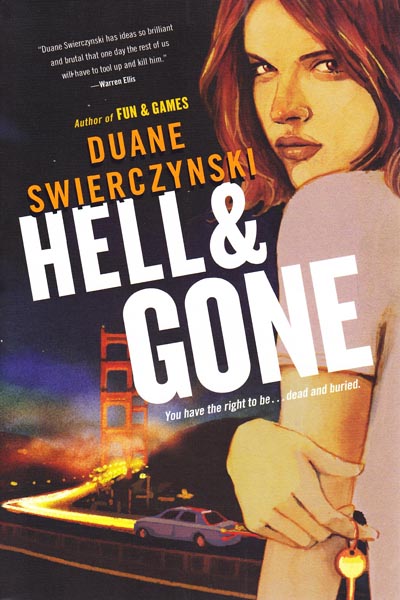
In honor the 75th anniversary of the official opening of the Golden Gate Bridge, The Bancroft Library at the University of California, Berkeley is pleased to present “Shrouded in Mysteries,” a guided tour of the bridge as depicted on the covers of mystery, detective, and crime novels.

Within just a few short years of its opening to traffic on May 28, 1937, the Golden Gate Bridge began appearing on the covers of San Francisco mysteries. The earliest known depiction of the bridge on a mystery novel occurred in 1940, on the cover of John Mersereau’s Murder Loves Company. Since then, the span has been featured on dozens of books. With its grace and beauty, and as the Bay Area’s iconic landmark, the Golden Gate Bridge immediately connects the reader to the setting of the story. The bridge is also symbolic danger and death, two elements inherent in crime fiction. Just as the physical bridge is often shrouded in fog, the image of the bridge is now shrouded with the stories told in these fictional mysteries.


Following are a few covers.. Be sure and go through the entire tour on the site above.. fabulous covers.