

Monday, June 8, 2020

Sunday, June 7, 2020
THE HAMMETT PRIZE: International Association of Crime Writers

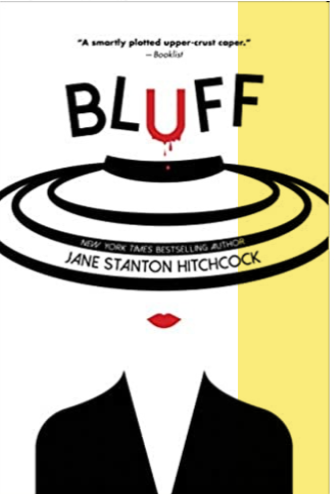 THE 2020 Dashiell Hammett Award for Literary Excellence in Crime Writing was announced by the International Association of Crime Writers
Bluff by Jane Stanton Hitchcock, Poisoned Pen Press
Also Nominated:
The Adventure of the Peculiar Protocols by Nicholas Meyer, St. Martin’s Press
Blood Relations by Jonathan Moore, Mariner Books
The Murals by William Bayer, Severn House Norco '80: The True Story of the Most Spectacular Bank Robbery in American History by Peter Houlahan, Counterpoint Press
The winner will be awarded the Hammett trophy, designed by artist Peter Boiger, depicting a falcon-headed figure based upon a celebrated photograph of Dashiell Hammett. The location of the presentation to be determined at a later time.

Saturday, June 6, 2020

CALL FOR ARTICLES: Senior Sleuths

The next issue of Mystery Readers Journal will focus on Senior Sleuths. We're looking for Reviews, Articles, and Author! Author! essays.
Reviews: 50-250 words; Articles: 250-1000 words; Author! Author! essays: 500-1500 words.
Author essays are first person, about yourself, your books, and your unique take on "Senior Sleuths'. Think of it as chatting with friends and other writers in the bar or cafe (or on Zoom) about your work and your 'Senior Sleuth' connection. Add a title and 2-3 sentence bio/tagline.
 Deadline: July 1, 2020
Here's a link to Mystery Readers Journal past themed issues.
Send to: Janet Rudolph, Editor. janet @ mysteryreaders.org
Please forward this request to anyone you think should be included.
Subscribe to Mystery Readers Journal. Themes in 2020: Environmental Mysteries: Italian Mysteries: Senior Sleuths: Ireland
Friday, June 5, 2020
CWA Daggers Awards Longlists 2020

GOLD DAGGER
Claire Askew: What You Pay For (Hodder & Stoughton)
Gary Bell: Beyond Reasonable Doubt (Raven Books)
Lou Berney: November Road (Harper Fiction)
MW Craven: Black Summer (Constable)
John Fairfax: Forced Confessions (Little, Brown)
Lucy Foley: The Guest List (Harper Fiction)
Elly Griffiths: The Lantern Men (Quercus Fiction)
Chris Hammer: Silver (Wildfire)
Mick Herron: Joe Country (John Murray)
SG MacLean: The Bear Pit (Quercus Fiction)
Patrick McGuinness: Throw Me to the Wolves (Jonathan Cape)
Abir Mukherjee: Death in the East (Harvill Secker)
Alex North: The Whisper Man (Michael Joseph)
Scott Phillips: That Left Turn at Albuquerque (Soho Crime)
Michael Robotham: Good Girl, Bad Girl (Sphere)
Tim Weaver: No One Home (Michael Joseph)
IAN FLEMING STEEL DAGGER
Lou Berney: November Road (Harper Fiction)
Tom Chatfield: This is Gomorrah (Hodder & Stoughton)
Karen Cleveland: Keep You Close (Bantam Press)
AA Dhand: One Way Out (Bantam Press)
Eva Dolan: Between Two Evils (Raven Books)
Helen Fields: Perfect Kill (Avon)
Oliver Harris: A Shadow Intelligence (Little, Brown)
Peter Heller: The River (Weidenfeld & Nicolson)
Greg Iles: Cemetery Road (Harper Fiction)
David Koepp: Cold Storage (HQ)
Adrian McKinty: The Chain (Orion Fiction)
Alex North: The Whisper Man (Michael Joseph)
Andrew Taylor: The King’s Evil (Harper Fiction)
JOHN CREASEY (NEW BLOOD) DAGGER
Steph Cha: Your House Will Pay (Faber & Faber)
Sherryl Clark: Trust Me, I'm Dead (Verve Books)
Samantha Downing: My Lovely Wife (Michael Joseph)
Philippa East: Little White Lies (HQ)
Andrew James Greig: Whirligig (Fledgling Press)
AS Hatch: This Dark Little Place (Serpent's Tail)
James Von Leyden: A Death in the Medina (Constable)
Deborah Masson: Hold Your Tongue (Corgi)
Owen Matthews: Black Sun (Bantam Press)
Felicity McLean: The Van Apfel Girls Are Gone (Point Blank)
Robin Morgan-Bentley: The Wreckage (Trapeze)
Trevor Wood: The Man on the Street (Quercus Fiction)
SAPERE BOOKS HISTORICAL DAGGER
Alis Hawkins: In Two Minds (The Dome Press)
Philip Kerr: Metropolis (Quercus Fiction)
SG MacLean: The Bear Pit (Quercus Fiction)
Abir Mukherjee: Death in the East (Harvill Secker)
SW Perry: The Serpent’s Mark (Corvus)
Alex Reeve: The Anarchists’ Club (Raven Books)
Gareth Rubin: Liberation Square (Michael Joseph)
SD Sykes: The Bone Fire (Hodder & Stoughton)
Andrew Taylor: The King’s Evil (Harper Collins)
Lynne Truss: The Man That Got Away (Raven Books)
Nicola Upson: Sorry for the Dead (Faber & Faber)
Ovidia Yu: The Paper Bark Tree Mystery (Constable)
CRIME FICTION IN TRANSLATION DAGGER
Edoardo Albinati: The Catholic School, translated by Anthony Shugaar (Picador)
Marion Brunet: Summer of Reckoning, translated by Katherine Gregor (Bitter Lemon Press)
Hannelore Cayre: The Godmother, translated by Stephanie Smee (Old Street Publishing)
K Ferrari: Like Flies from Afar, translated by Adrian Nathan West (Canongate Books)
Jorge Galán: November, translated by Jason Wilson (Constable)
Johana Gustawsson: Blood Song, translated by David Warriner (Orenda Books)
Jørn Lier Horst: The Cabin, translated by Anne Bruce (Michael Joseph)
Sergio Olguin: The Fragility of Bodies, translated by Miranda France (Bitter Lemon Press)
Leonardo Padura: Grab a Snake by the Tail, translated by Peter Bush (Bitter Lemon Press)
Antti Tuomainen: Little Siberia, translated by David Hackston (Orenda Books)
SHORT STORY DAGGER
Fiona Cummins: Dead Weight in Exit Wounds, edited by Paul B Kane and Marie O’Regan (Titan Books)
Jeffery Deaver: Connecting the Dots in Invisible Blood, edited by Maxim Jakubowski (Titan Books)
Jeffery Deaver: The Bully in Exit Wounds, edited by Paul B Kane and Marie O’Regan (Titan Books)
Paul Finch: The New Lad in Exit Wounds, edited by Paul B Kane and Marie O’Regan (Titan Books)
Christopher Fowler: The Washing in Invisible Blood, edited by Maxim Jakubowski (Titan Books)
Christopher Fowler: Bryant and May and The Devil's Triangle in Bryant and May: England's Finest (Doubleday)
Lauren Henderson: #Me Too in Invisible Blood, edited by Maxim Jakubowski (Titan Books)
Louise Jensen: The Recipe in Exit Wounds, edited by Paul B Kane and Marie O’Regan (Titan Books)
Dean Koontz: Kittens in Exit Wounds, edited by Paul B Kane and Marie O’Regan (Titan Books)
Syd Moore: Easily Made in 12 Strange Days of Christmas (Point Blank Press)
ALCS GOLD DAGGER FOR NON-FICTION
Casey Cep: Furious Hours (William Heinemann)
Julia Ebner: Going Dark: The Secret Social Lives of Extremists (Bloomsbury Publishing)
Peter Everett: Corrupt Bodies (Icon Books)
Caroline Goode: Honour: Achieving Justice for Banaz Mahmod (Oneworld Publications)
Joanna Jolly: Red River Girl (Virago)
Jodi Kantor & Megan Twohey: She Said (Bloomsbury Circus)
Sean O’Connor: The Fatal Passion of Alma Rattenbury (Simon & Schuster)
Adam Sisman: The Professor and the Parson: A Story of Desire, Deceit and Defrocking (Profile Books)
Susannah Stapleton: The Adventures of Maud West, Lady Detective (Picador)
Fred Vermorel: Dead Fashion Girl: A Situationist Detective Story (Strange Attractor Press)
DAGGER IN THE LIBRARY
Benjamin Black
Christopher Brookmyre
Jane Casey
Paul Finch
Alex Gray
Mick Herron
Quintin Jardine
Lisa Jewell
Erin Kelly
Adrian McKinty
Denise Mina
James Oswald
DEBUT DAGGER
Barbara Austin: Lowlands
Anna Caig: The Spae-Wife
Loraine Fowlow: Undercut
Leanne Fry: Whipstick
Kim Hays: Pesticide
Jack Kapica: Blogger’s End
Nicholas Morrish: Emergency Drill
Josephine Moulds: Revolution Never Lies
Michael Munro: Bitter Lake
Karen Taylor: Grim Fairy Tale
Jane Wing: Dark Pastimes
Sarah Yarwood-Lovett: A Generation of Viper
PUBLISHERS’ DAGGER
Allison & Busby
Bitter Lemon
Harvill Secker
Head of Zeus
HQ
Michael Joseph
Orenda
Orion
Pushkin Vertigo
Raven
Severn House
Sphere
HT: Euro Crime
Thursday, June 4, 2020
HARDBOILED TIED IN RIBBONS: Guest post by Janet Rogers

HARDBOILED TIED IN RIBBONS
There are properly extended reviews of Hill, Jackson & Rizzuto’s recent The Annotated Big Sleep. You might for example try Geoff Nicholson, in the Los Angeles Review of Books. My interest isn’t nearly expert enough for that. It’s simply a fascination with the decades of the 1940s and 50s - and with the generation that came through them - that Raymond Chandler wrote about and for. His seven novels, featuring private eye Philip Marlowe, were published at intervals through those two decades, more or less. The Big Sleep, published 1939, was the first.
So this is not a review. Instead, it leans heavily on The Annotated Big Sleep, in order to marvel at how fast the world of a novel dates. We know the past is another country. The shock is that we become expatriates so soon. The Big Sleep, after all, was published just about within living memory. Yet already we profit immensely from reading it with notes: notes on the shaping events, on the language and idiom, the manners, mannerisms, habits and prejudices of the times. Without them, there are commonplaces that go missing. References pass by. On practically every page.
Not least, we profit from notes on the world of hardboiled fiction that The Big Sleep was about to transform. The hardboiled school was everywhere on the newsstands when Chandler first enrolled in it, and Hill, Jackson & Rizzuto are revelatory here about its catalogue of accessories. The gumshoe? Blondes and blackmail? Hard liquor? The camera eye? They hardly get you started on the hardboiled themes, motifs and devices that Chandler was accommodating, when he shouldered The Big Sleep into the ranks of dark, toughened-up mystery writing. Like his readers, in 1939 Chandler knew his way around dark from direct experience, and could see plenty more tough on the horizon. But by then he’d also worked at how to put those things on the page, until he had the whole repertory of hardboiled dripping from his fingers.
It had taken time. Chandler had apprenticed himself to the mystery pulps for most of the 1930s. In the midst of the Great Depression, down and out of a job, he’d made a living at a penny-a-word, learning his new craft as he wrote. An English classical education had taught him to analyze. He brought method and application of his own. And as for the learning the ropes, the fellow pulp writers he could crib from were the best; there’s a 1936 photo of Black Mask magazine authors, Chandler in there among them, where Dashiell Hammett stands a head above the rest.
Analyzed, absorbed and then practiced in a score of his Black Mask and Dime Detective stories, Chandler imported those hardboiled accessories, wholesale, into his first full-length novel. And yet, though The Big Sleep was born into cliché on an industrial scale, it was promoted hard by its publisher Knopf and it sold; better than the average from the outset, and triumphantly in paperback. The book has been in print ever since. So what did it do that was so different?
Well, obviously not the storyline. That was bulked up from a handful of Chandler’s earlier pulp outings, and plotting is famously a department where he didn’t overstrain. But while the novel begins from conventionally hardboiled beginnings - a private eye visits a rich client, unsure about why he’s being hired, encounters the loyal butler, acts threatened around alluring women and then fragile around gay men - something very different is also going on.
To delight in the detail of those differences, we now have The Annotated Big Sleep. And for the one-liner that cuts to the heart of the matter, there’s still Chandler himself. You’ll know the line I mean, from his essay "The Simple Art of Murder," written when Marlowe’s character and worldview had developed through three more novels. It comes where the writer is reflecting on a transformation in fiction that had worked to produce Hammett, by way of Hemingway. ‘It probably started in poetry;’ he says, ‘almost everything does.’
In Marlowe, Chandler grabs a first-person narrator with both hands, gives his voice to a smart, seen-it-all gumshoe and makes poetry out of his one fixed idea: that aiming for a certain decency, honesty and justice in a corrupting world, is to be his own man. The poetry is in how the gumshoe’s world looks to him. And his rather old-fashioned code is what makes him hero of his own story, an idea that was important to Chandler. ‘In everything that can be called art…’ he says later in The Simple Art of Murder, ‘…there is a quality of redemption.’ It seems that idea - Marlowe’s push back against the odds, his middle-finger defiance that puts heroic in reach of Everyman - hit a general nerve. Perhaps because it did come packaged in the poetry.
As applied to a hardboiled mystery in The Big Sleep, the result is a Chandler original. Marlowe’s début nods to some very stiff, high-sounding principles. But wrapped in what Robert Towne calls Chandler’s lazy lyricism, it waves a wand that makes a gumshoe’s version of uprightness look not only tough but subversive. For a generation with no illusions about the realities behind hardboiled fiction - everyday graft, police complicity, the syndicated rackets, the rainproof rich - Marlowe’s splicing of contempt with his own brand of streetwise integrity, proved magnetic. His style as a survivor-hero became the cool, bought and read by millions through the Cold War, Korea and on.
Those accessories to hardboiled - the ones Chandler worked at through the 1930s - live on. Marlowe did them no harm at all. They’ve become as indispensable as high tea and drawing rooms still are to the cozy English murder. But a handful of writers caught the spark, not only of Chandler’s adroitness with the clichés of hardboiled, but also of the poetry; his lazy lyric of the subversive that ties the clichés in ribbons, and transforms them. The same Robert Towne, for one, in his screenplay for Chinatown. Jonathan Lethem’s Motherless Brooklyn for another. And though, if you’ve come with me this far, you won’t need any extra reason for discovering The Annotated Big Sleep, here’s one anyway. Jonathan Lethem also wrote the foreword.
***

Subscribe to:
Posts (Atom)